location_on Serving Allen & All of Collin County
verified Locally Owned & Operated
★★★★★ 4.9 Google Reviews   |   (972) 521-7225
Damper Experts

Damper Repair Replacement
& In Allen, TX

The damper controls airflow through your chimney. When it’s stuck open, your conditioned air pours straight up the flue — costing hundreds in wasted energy per year. When it won’t open properly, smoke backs up into your living room. We repair and replace both throat dampers and top-sealing dampers for Allen homeowners. Call (972) 521-7225.

Fix Your Damper

Fill out the form and we’ll call you back within 2 hours.

verified Licensed
savings Save on Energy
star 4.9 Stars
schedule Same-Week Service
photo_camera Photo Documentation
Damper Repair — Starting at $150
Energy Loss

A Broken Damper Costs You Money Every Day

A damper stuck open is like leaving a window open 24/7 — except the window is connected to a vertical tunnel that actively pulls conditioned air out of your house. In Allen’s summers, that’s cool air from your AC pouring up the chimney. In winter, it’s heated air. The Department of Energy estimates an open damper can increase heating and cooling costs by $200–$400 per year.
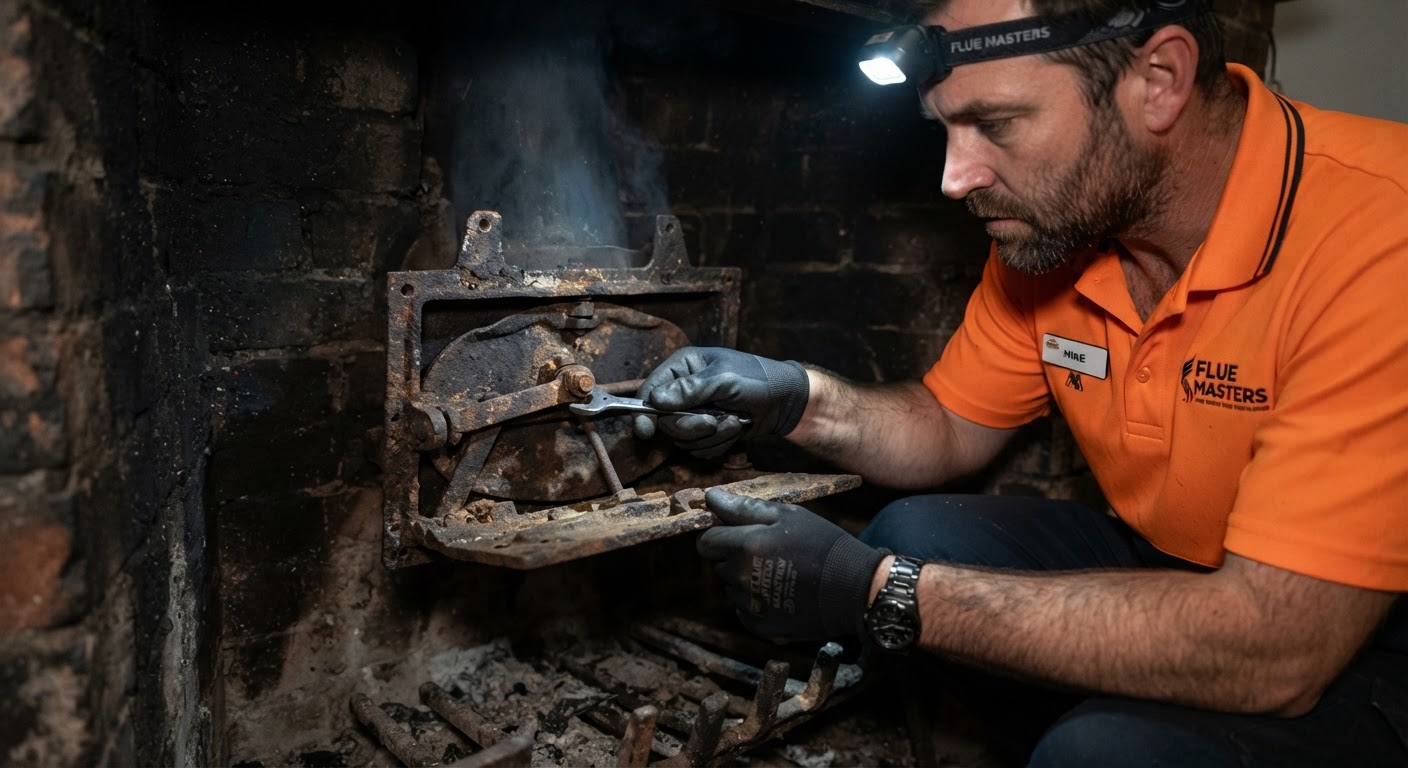
Throat dampers — the traditional cast-iron plate at the base of the flue — fail for predictable reasons. Rust from moisture, warping from heat, creosote buildup jamming the mechanism, or simply decades of use wearing out the hinge and handle assembly.

When a throat damper fails beyond repair, we recommend upgrading to a top-sealing damper. Top-sealing dampers sit at the top of the flue and are operated by a stainless steel cable running down to the firebox. They seal better than throat dampers, double as a rain cap, and last 20+ years. It’s a better product in every way.

A gloved hand holds a flashlight and wire brush to inspect a rusty, damaged fireplace damper door.
Options

Throat Damper vs. Top-Sealing Damper

tune

Throat Damper Repair

Fix the existing cast-iron damper. Options include rust removal and lubrication, handle replacement, hinge repair, or full plate replacement. Cost: $150–$350. Best when the existing damper is salvageable and the frame is intact.
roofing

Top-Sealing Damper

Mount at the chimney top, operated by a cable in the firebox. Seals airtight with a silicone gasket. Also functions as a chimney cap and rain guard. Cost: $300–$600 installed. Best when the old damper is beyond repair or you want a permanent upgrade.
A newly installed cast iron fireplace damper door set into a brick chimney flue with a spring-loaded handle.
What’s Included

Every Damper Job Includes

check_circle Damper inspection and diagnosis
check_circle Repair or replacement with OEM parts
check_circle Operation test (open/close/seal check)
check_circle Silicone gasket seal (top-sealing models)
check_circle Cable routing and tensioning
check_circle Firebox bracket installation
check_circle Before & after documentation
check_circle Manufacturer warranty
Warning Signs

Signs Your Damper Needs Attention

We check the damper during every chimney sweep and inspection. If yours isn’t working right, we’ll let you know and quote the fix on the spot. If smoke still comes back into the room after the damper is fixed, our fireplace downdraft repair and chimney fan installation services find and fix the cause.

A rusted, warped fireplace damper covered in soot, showing signs of damage and needing attention.
FAQs

Damper Questions

How much does damper repair cost?

Throat damper repair (lubrication, handle, hinge): $150–$350. Top-sealing damper installed: $300–$600. The top-sealing option replaces the throat damper entirely and also serves as a chimney cap, so you’re getting two products in one.

If the frame is intact and the damper plate just needs lubrication or a handle, repair is fine. If the plate is warped, the frame is cracked, or the damper is severely rusted, replacement is better. In most cases, we recommend upgrading to a top-sealing damper — it costs a bit more than a throat damper repair but lasts longer and seals better.

It’s a damper that mounts at the top of the chimney instead of inside the firebox. A stainless steel cable runs down the flue to a handle or bracket in the firebox. When closed, a silicone gasket creates an airtight seal. It also works as a chimney cap, keeping rain and animals out.

Most gas fireplaces have a damper, but it should be locked open or removed entirely per manufacturer requirements. Gas fireplaces need constant ventilation when in use. If your gas fireplace damper is closing accidentally, that’s a safety hazard — call us to inspect it.

Fix It Now

Schedule Damper Repair

Stop wasting energy. A working damper pays for itself in lower utility bills within one season.

Mon–Sun: 7am–8pm

Request an Appointment

We respond within 2 hours during business hours.